How the Pultrusion Process Determines the Performance of FRP Structural Profiles

The performance characteristics of a fiber-reinforced polymer structural profile — its tensile strength, stiffness, corrosion resistance, and long-term stability — aren’t just a function of the materials that go into it. They’re a function of how those materials are processed. The pultrusion method, which is how virtually all FRP structural profiles intended for load-bearing applications are manufactured, produces a distinctive set of properties that follow directly from the manufacturing process itself.
Understanding the process helps explain why FRP pultruded profiles behave the way they do structurally, and why they’re suited to some applications and less suited to others.
What pultrusion actually is
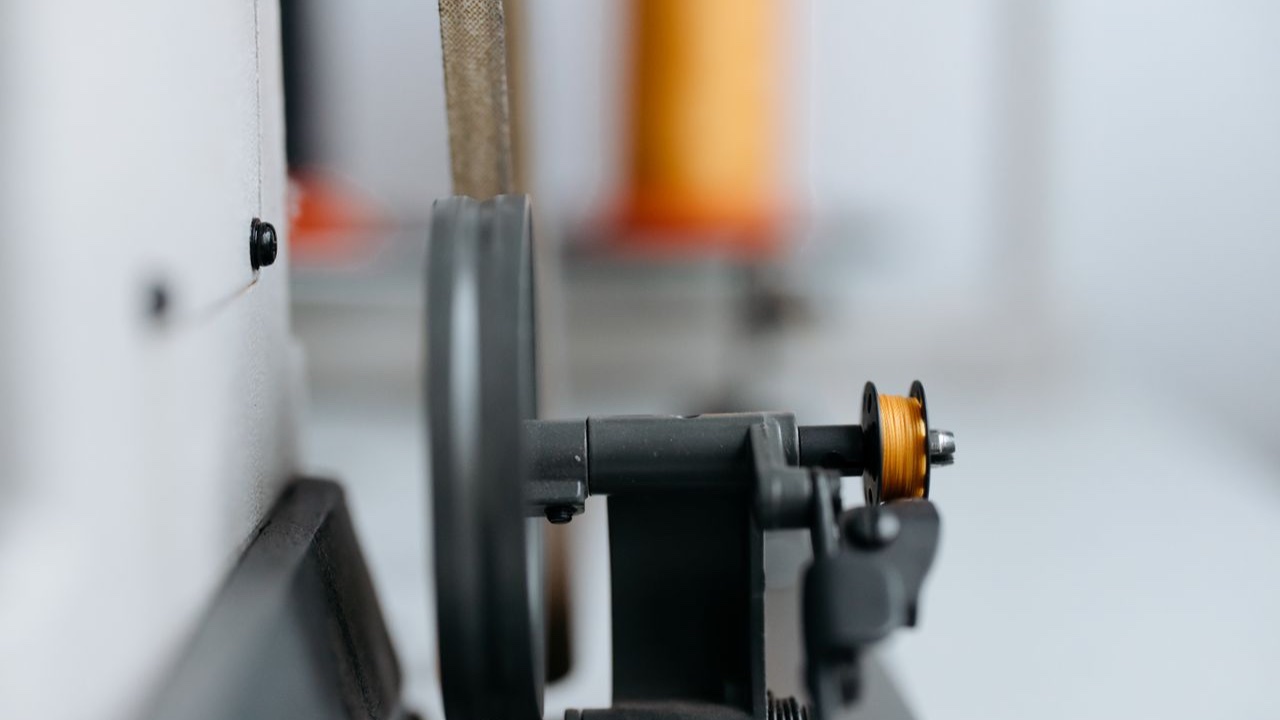
Pultrusion is a continuous manufacturing process. Glass fiber reinforcements — typically rovings (bundles of continuous fibers) and mats (randomly oriented chopped fibers) — are pulled from supply spools through a resin bath, where they’re impregnated with liquid resin. The saturated reinforcement is then pulled through a heated die that defines the cross-section profile of the finished product. As the material passes through the die, the heat cures the resin, locking the fibers in place in the final shape.
The key word in that description is “pulled.” Unlike most manufacturing processes where material is pushed or pressed into a mold, pultrusion works by pulling the reinforcement through the process. This continuous pulling action is what orients the fibers predominantly in the lengthwise direction of the profile — the direction of pull.
This isn’t incidental. The fiber orientation is the most important factor in the structural behavior of the finished profile.
Why fiber orientation matters
Glass fiber reinforcement provides strength in the direction of the fiber. A fiber running in the lengthwise direction of a structural profile contributes tensile strength when the profile is loaded in tension, bending strength when it’s loaded as a beam, and compressive strength when it’s loaded as a column.
In pultruded profiles, the majority of the reinforcement is oriented lengthwise because of the nature of the pulling process. The rovings run continuously from the supply spool to the finished product, parallel to the pulling direction. This produces very high longitudinal fiber content — typically 50–70% of the profile volume is glass fiber in the longitudinal direction.
The consequence is a profile with exceptional strength and stiffness along its length — comparable to or exceeding steel in specific (weight-adjusted) terms for longitudinal loading — but with relatively lower properties in the transverse direction. A pultruded I-beam loaded in bending about its strong axis performs well; the same profile loaded in a direction that relies on transverse properties performs less well.
This directional behavior is fundamental to understanding how to use FRP pultruded profiles correctly. They’re not isotropic like steel — the design approach accounts for the directionality of properties rather than assuming the same performance in all directions.
The resin system’s role in the process
The pultrusion process applies heat to cure the resin as the profile passes through the die. The resin system must be formulated to cure within the time and temperature window of the die — too slow and the profile exits uncured; too fast and the resin gels before the fiber is properly wetted.
This process constraint means that not all resin systems are suitable for pultrusion. Polyester resins (including isophthalic polyester) are the most commonly pultruded resins because they cure readily under heat. Vinyl ester resins can be pultruded but require more careful process control. Epoxy resins are less commonly used in pultrusion because their cure kinetics are harder to manage in a continuous process.
The practical implication for end users is that the resin system in a pultruded profile is tied to the manufacturing process. When chemical resistance or fire performance requirements push toward vinyl ester or phenolic resin, the manufacturer needs specific experience with those resin systems in the pultrusion process. The result isn’t just a different resin in the same profile — it’s a somewhat different product that required process adjustment to produce.
Surface finish and what it tells you
Pultruded profiles have a distinctive surface — typically smooth and slightly glossy, with a fine texture that follows the die surface. In cross-section, the outer surface is resin-rich (the die contact area) while the interior is primarily fiber-dominated.
The resin-rich outer layer provides some UV and chemical protection for the structural fibers underneath, but it’s not the primary corrosion protection mechanism the way a coating is for steel. The fibers in a pultruded profile are protected by the surrounding resin throughout the depth of the profile, not just at the surface.
This matters for cut ends and drilled holes. When a pultruded profile is cut or drilled, the freshly exposed cross-section reveals the fiber-dominated interior. In corrosive environments, those cut ends should be sealed with resin or a compatible sealant to prevent moisture ingress at the exposed fiber ends. It’s a straightforward maintenance step but one that’s easy to skip and worth specifying explicitly.
How the process explains the dimensional options
Pultrusion produces profiles by pulling reinforcement through a die, which means the profile shape is defined by the die geometry. The available cross-section shapes for pultruded FRP profiles are therefore similar to those available in structural steel: I-beams, channels, angles, square and rectangular tubes, solid rods and round tubes, and various custom shapes.
Standard profile sizes have been developed by major manufacturers and are stocked for immediate availability. Custom profiles — different flange widths, modified web heights, unusual cross-sections — require a custom die, which has a tooling cost and lead time. For large-volume applications, custom profiles are economically viable. For small-volume or one-off applications, working within the standard profile sizes is usually more practical.
The FRP pultruded profiles available from established manufacturers typically cover most standard structural shapes in multiple size ranges, with the standard sizes developed to address the most common structural applications.
What the process doesn’t do
Pultrusion excels at producing prismatic profiles — shapes with a constant cross-section along their length. It doesn’t produce tapered sections, complex three-dimensional shapes, or components with varying cross-section. For those geometries, other composite manufacturing methods (filament winding, hand layup, RTM) are more appropriate.
This isn’t a limitation that affects most structural applications, where prismatic beams, columns, and struts are the norm. But it does mean that FRP structural design with pultruded profiles tends to follow the same general approach as steel design with rolled sections: prismatic members connected at nodes, with the connection design being a separate consideration from the member design.
Understanding this framing — that pultruded FRP profiles are the composite equivalent of rolled steel sections, not a universally shapeable material — helps set realistic expectations about both what they can do and how they’re used in practice.