What Actually Limits FPV Range — and Why the Antenna Is Usually the Answer
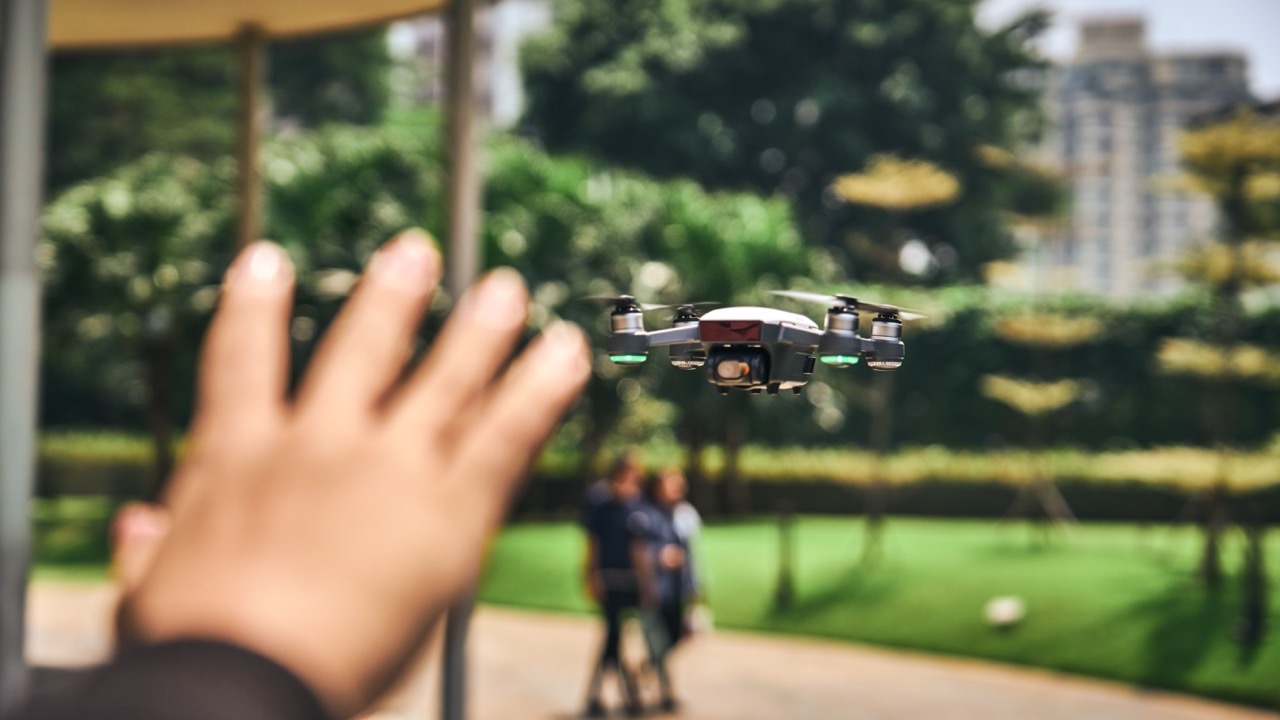
When an FPV pilot loses video feed at 400 meters and a different pilot running similar hardware gets clean signal at 1.2 kilometers, the instinct is to blame the transmitter output power or the receiver sensitivity. Those are the numbers that appear on product spec sheets, so they’re where attention goes. But in the majority of cases where two setups with comparable electronics produce meaningfully different range, the differentiating variable isn’t the radio hardware — it’s the antenna.
Understanding why requires looking at how range is actually determined in an FPV link.
The link budget and where antenna fits into it
The signal strength at a receiver depends on several factors combined: transmitter output power, transmit antenna gain, free-space path loss over the distance between transmitter and receiver, receive antenna gain, and receiver sensitivity. These combine into what’s called a link budget — a calculation of whether the received signal is strong enough for the system to decode reliably.
Free-space path loss at 5.8 GHz increases roughly 6 dB every time distance doubles. Transmitter output power in most markets is regulated, and the legal limits don’t leave much room to increase it. Receiver sensitivity has practical limits based on the noise floor of the hardware. That leaves antenna gain as the variable with the most room for improvement on both ends of the link without touching regulated parameters.
A 3 dBi gain improvement at the transmit antenna and 3 dBi at the receive antenna adds 6 dB to the total link budget. A 6 dB improvement in link budget roughly doubles effective range under free-space conditions. This is why antenna selection has a disproportionate effect on range compared to other hardware choices — it acts on both ends of the link simultaneously, and the gains multiply rather than add.
Why stock antennas underperform
The antennas that ship with FPV video transmitters and receivers are designed to be small, cheap, and adequate for close-range testing. They’re typically linear polarized whip antennas with 2 dBi or less of gain, and their radiation patterns are optimized for omnidirectional coverage rather than any particular flight direction.
This tradeoff is reasonable for proximity flying where the drone is never far from the pilot. It becomes a significant constraint for long-range flying where the drone may be hundreds of meters away in a specific direction and the signal path quality matters. Replacing both the transmitter antenna and receiver antenna with higher-performance options is the single most cost-effective improvement for range extension in an FPV system.
Circular polarization and why it matters at range
Most aftermarket FPV antennas used for range flying are circularly polarized — specifically RHCP (right-hand circular polarization) or LHCP (left-hand circular polarization). Circular polarization addresses a problem inherent in linear polarized systems at distance: polarization rotation.
As a drone moves through the air at varying attitudes, the orientation of its antenna changes relative to the ground station. A linear polarized transmit antenna that’s vertically oriented on the drone might be tilted 45 or 90 degrees during a banking turn. When a linearly polarized transmit antenna is cross-polarized relative to a linearly polarized receive antenna, signal loss can reach 20–30 dB — enough to drop a signal from clear reception to complete loss.
Circular polarization is immune to this rotation. A circularly polarized signal maintains consistent coupling with a matching circularly polarized receive antenna regardless of the transmit antenna’s physical orientation. The cost is approximately 3 dB of additional path loss compared to perfectly matched linear polarization under ideal conditions — but ideal conditions don’t exist once the drone starts maneuvering. The 3 dB “loss” buys consistent reception instead of intermittent failure during attitude changes, and at long range that tradeoff is decisively in favor of circular polarization.
Directional antennas at the ground station
For maximum range in a specific direction, directional antennas at the ground station provide substantial gain improvement over omnidirectional options. A patch antenna or helical antenna in the 8–14 dBi range concentrates received signal from a defined beam toward the drone’s flight area, effectively pulling in signal that a stock antenna would not capture.
The practical constraint is that directional antennas require the pilot or a tracker to keep the antenna pointed toward the drone throughout the flight. A patch antenna with a 60-degree beamwidth can accommodate some angular movement without manual adjustment, but at longer ranges where the drone’s angular position relative to the pilot changes slowly, this is manageable. For applications where the drone may fly in any direction around the pilot, a combination approach — omnidirectional antenna for general coverage plus directional for range in specific corridors — provides flexibility without sacrificing maximum reach.
What this means in practice
The upgrade path for range extension in an FPV system has a clear order of priority based on impact per dollar. Replacing stock linear antennas with matched circular polarized antennas on both transmitter and receiver addresses the polarization rotation problem and improves consistent signal quality across all flight attitudes. Adding a directional antenna at the ground station provides the largest single gain increase for range in a defined direction.
Upgrading transmitter output power — where regulations allow — contributes to range but adds only to the transmit side. A long range FPV antenna upgrade improves both the transmit and receive ends of the link, which is why antenna changes consistently produce larger range improvements than equivalent investment in transmitter output power.
Frequency band and antenna size tradeoffs
FPV video systems operate primarily at 5.8 GHz, with some long-range setups using 2.4 GHz or 900 MHz. Lower frequencies penetrate obstacles better and have less free-space path loss over equivalent distances, but the antennas are physically larger — a quarter-wave element at 900 MHz is about 8 centimeters, compared to about 1.3 centimeters at 5.8 GHz.
For fixed-wing or long-range cruising setups where physical size and weight can be accommodated, 900 MHz or 2.4 GHz systems with appropriate antennas can extend range beyond what’s practical at 5.8 GHz. For compact racing or freestyle quads where antenna size affects handling and crash survivability, 5.8 GHz remains the practical choice, and the range work happens through gain and polarization rather than frequency selection.
The antenna decision for any FPV setup is therefore not a single choice but a combination: frequency band based on use case, polarization type based on flight style and attitude variation, and gain level based on the range and directional requirements of the specific application. Getting each of these right for the intended use produces a system that performs near its theoretical limits. Getting any one of them wrong limits range in ways that no amount of transmitter power increase will fully compensate for.
The signal has to make it back as well as out. Antenna quality on both ends of the link determines whether it does.